Learn more about Buddhism & Meditation
About Meditation

What is Meditation?
Meditation is an action of mind whose nature is single-pointed concentration and whose function is to make the mind peaceful and calm.
In the practice of meditation, we intentionally cultivate peaceful and beneficial states of mind. There are many different meditations we can learn, each helping us to develop a particular virtuous mind. By becoming familiar with these positive states of mind, they gradually become our natural way of responding to life’s challenges. Meditation teaches us practical methods to make both ourselves and others happy by developing inner peace, and in this way making our lives more meaningful.




How to Meditate
A Simple Breathing Meditation
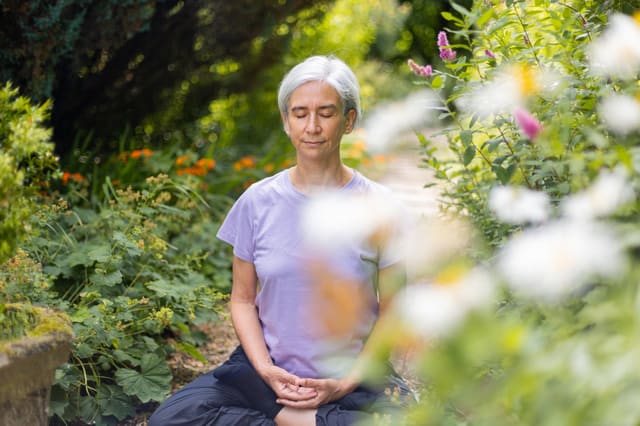
The first stage of meditation is to stop distractions and make our mind clearer by practicing simple breathing meditation. We choose a quiet peace to meditate and sit upright in a comfortable position. We turn our attention to our breathing. We breathe naturally and try to become aware of the sensation of the breath as it enters and leaves the nostrils. This sensation is our object of meditation. We try to concentrate on it to the exclusion of everything else and remain focused single-pointedly on the sensation of the breath. If we discover that our mind has wandered and is following our thoughts, we should immediately return it to the breath.

How To Go Deeper
We should train in breathing meditation until we can reduce our gross distractions and gain some initial control over our mind. Then we can progress to deeper and more transformative meditations such as the Lamrim meditations explained in The New Meditation Handbook. Through becoming familiar with these meditations we will be able to transform our mind from a negative state to a positive state. To ensure our meditation is effective, each meditation practice is presented in two stages: the contemplation and the actual meditation.

We contemplate the meaning of a spiritual instruction that we have heard or read. By contemplating such instructions deeply, eventually we reach a definite conclusion, or cause a specific virtuous state of mind to arise. This is the object of meditation. We then concentrate single-pointedly on our object for as long as possible to become deeply acquainted with it.

Why Meditate?
If we understand the benefits of meditation this helps us to be motivated in our meditation practice. There are many benefits of meditation including:
A peaceful mind
If we train in meditation, our mind will gradually become more and more peaceful, and we will experience a purer and purer form of happiness. The real source of happiness is inner peace.
Reduced negative thoughts
It is through the practice of meditation that we can gradually reduce and eliminate our negative, disturbed states of mind and replace them with positive, peaceful states.
Contentment
By practicing meditation patiently, our distracting thoughts will subside and our mind will become still. This causes a feeling of deep happiness and contentment to naturally arise from within. This feeling of happiness and contentment does not depend at all upon external conditions.

Reduces stress
Much of the stress and tension we normally experience comes from our mind. Meditation helps reduce this stress and creates an inner space and clarity that enables us to control our mind regardless of the external situation. Eventually we will be able to stay happy all the time even in the most difficult circumstances.
Improved relationships with family and at work
We have to manage our time and energy in such a way that we can be of maximum benefit to others. To do this effectively we need time alone to recover our strength, collect our thoughts and see things in perspective through formal meditation practice. This helps us to cope with the busyness and difficulties of daily life. In this way difficult situations and relationships become easier to deal with, we will naturally feel warmer towards other people and our relationships with others will gradually improve. We are always encouraged to integrate our meditation practice with training our mind in daily life.
Spiritual Progress
If we train in meditation systematically, eventually we will be able to eradicate from our mind the delusions that are the causes of all our problems and suffering. In this way, we will come to experience permanent inner peace. Then, day and night in life after life, we will experience only peace and happiness.

The Goal of Buddhist Meditation
Both contemplation and meditation serve to familiarize our mind with meaningful objects. The more familiar we are with such objects, the more peaceful our mind becomes. By training in meditation, and living in accordance with the insights and resolutions developed during meditation, eventually we will be able to maintain a peaceful mind continuously, throughout our life.

FAQs